
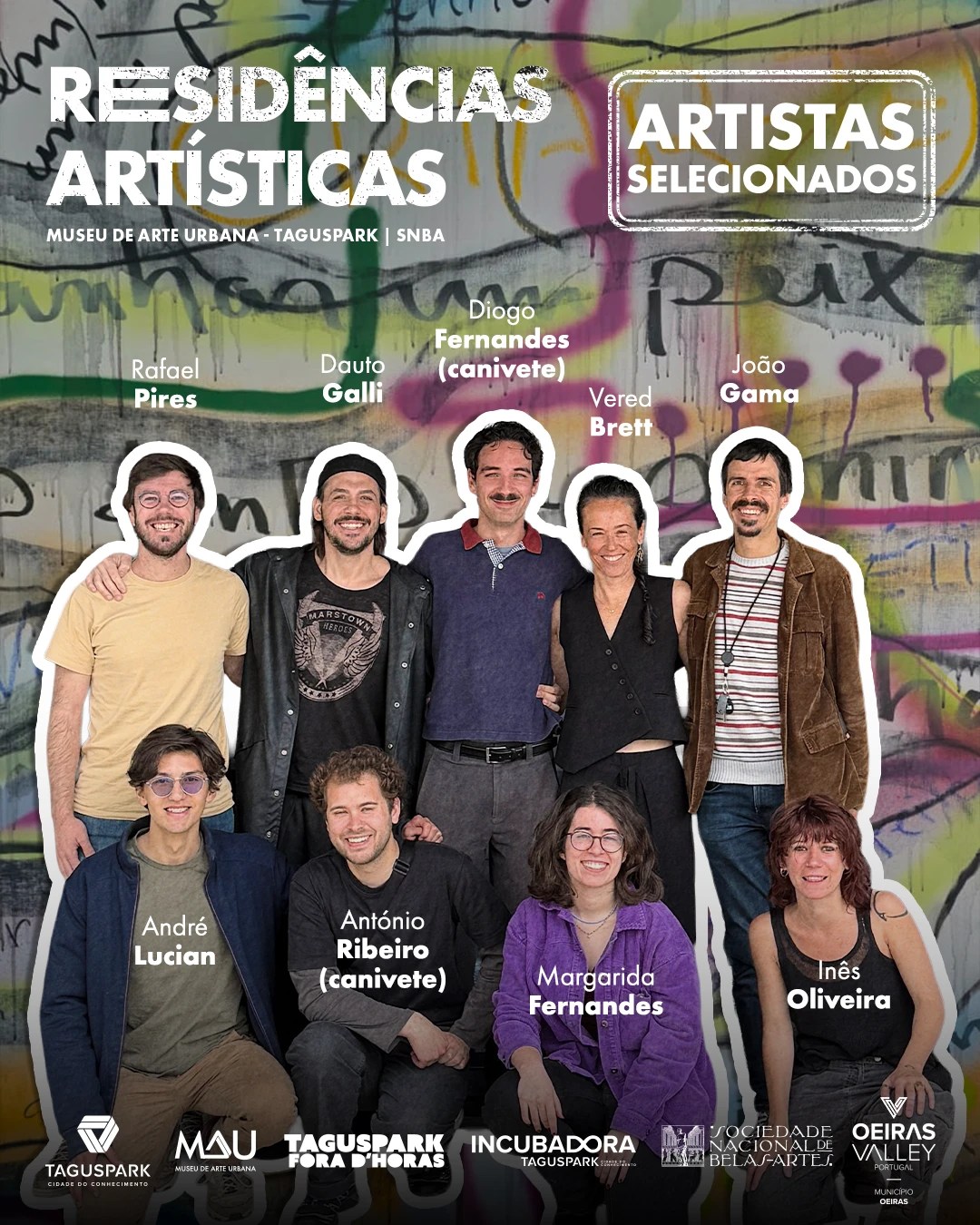
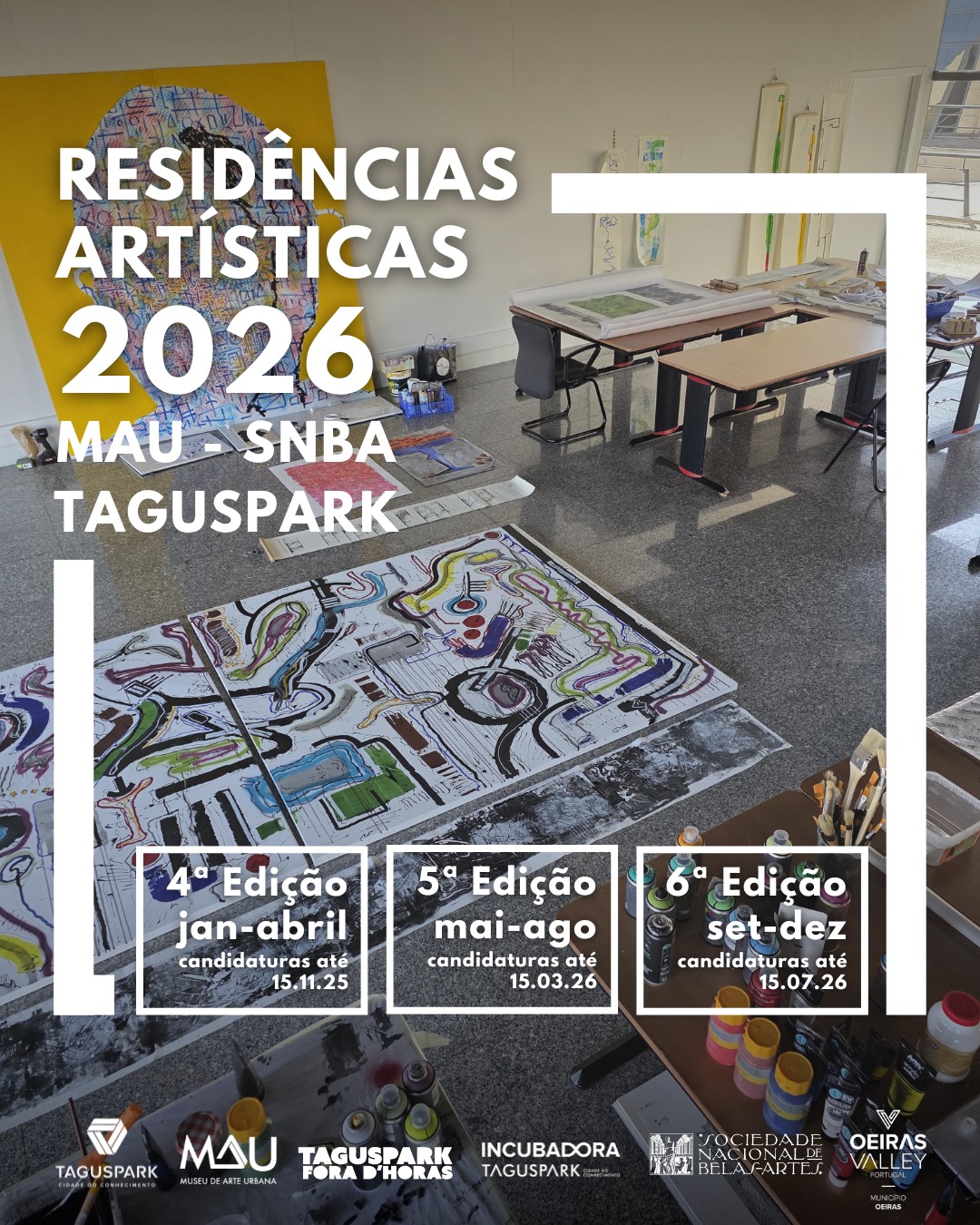

The MAU—Taguspark Museum of Urban Art—and the SNBA—National Society of Fine Arts—have selected nine projects for the 6th edition of the MAU-SNBA Artist Residencies, the highest number since the program’s inception in 2025. The residency began on September 8 and runs through December.
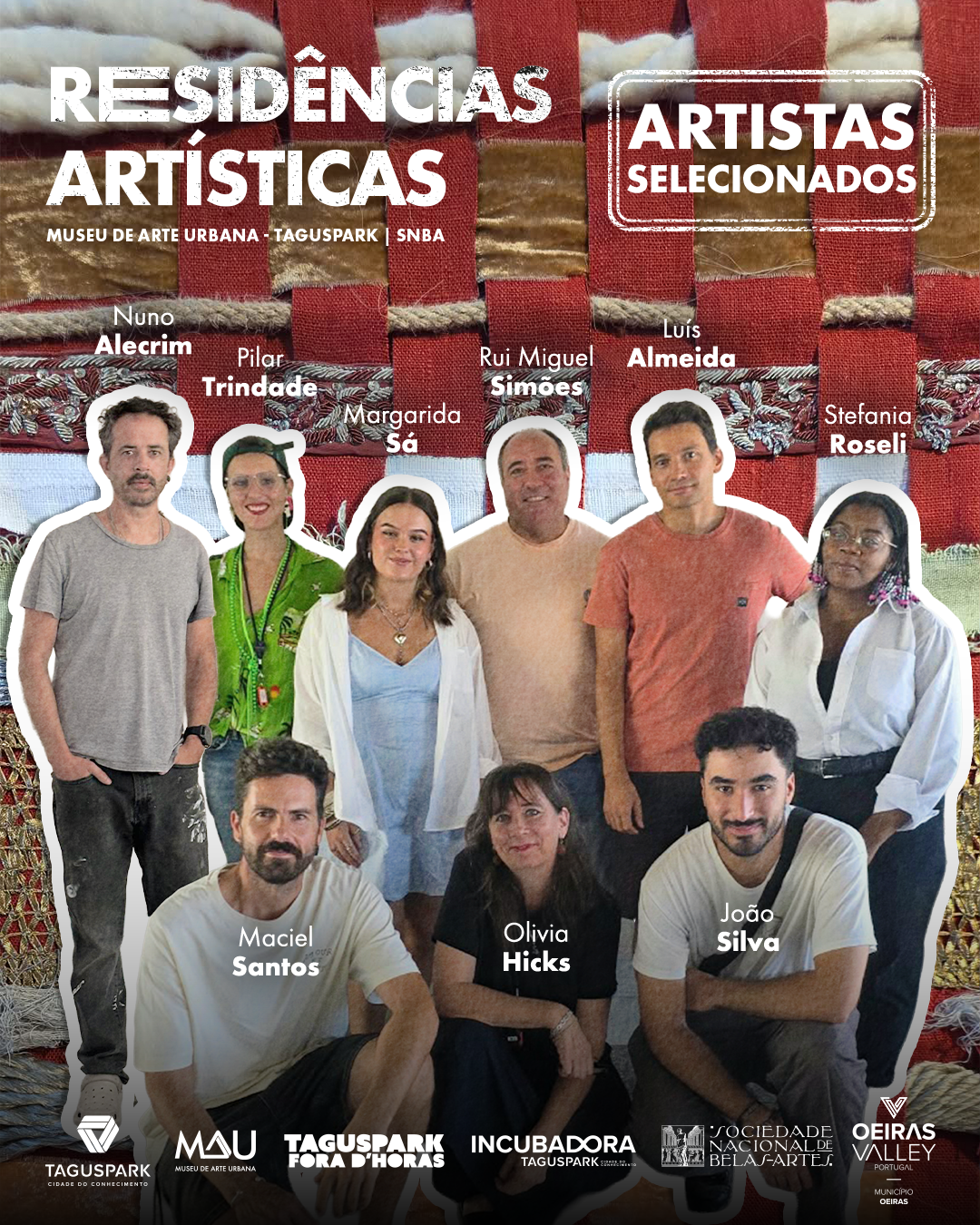
Olivia Hicks, Pilar Trindade, Rui Simões, Nuno Alecrim, João Silva, Luís Almeida, Margarida Sá, Stefania Roseli, and Maciel Santos were the selected artists, who will now have four months to develop their projects in the creative environment of Taguspark.

This is the third edition held this year, following those that took place in January and May. With this edition, the program has now supported 39 projects—a growth that reinforces Taguspark’s strategic commitment to the intersection of art, science, and technology.

“This program isn’t limited to the cultural aspect; it’s part of our strategic vision for Taguspark as a whole. The growth we’ve seen with each edition shows that we’re on the right track, and we want to continue to help it grow. A science and technology ecosystem benefits when artistic creation takes place within it—every day, not just occasionally. Those who work here don’t have to go out to find art; they encounter it as part of their normal daily routine,” says Eduardo Baptista Correia, CEO of Taguspark.

“This initiative is working out very well. Artists have emerged with very interesting proposals. A sort of incubator has been created—an experience quite different from other contexts. This opportunity to encounter different artistic languages in the same space, the exchange of ideas, and the human relationships that develop. As far as the SNBA and Taguspark are concerned, I think this is an exemplary approach. It opens up work opportunities for artists, solutions, and avenues for learning,” says Jaime Silva, painter and vice president of the SNBA’s board of directors.

The artists and their projects:

Olivia Hicks – Continues the “Two Rivers” series, dedicated to the Tagus and the Thames, two rivers associated with the places she considers home. Through large-format drawings—primarily in ballpoint pen on canvas—she explores the relationships between Portugal and England, weaving together stories, memories, and different time frames. The project seeks to reveal similarities and contrasts between the two territories, superimposing past and present within a single visual narrative.

Pilar Trindade – The project explores the relationship between food, the body, memory, and self-representation, transforming elements of everyday life into artistic material. Citrus fruits, vegetables, ginger, family meals, and other foods are presented in connection with their properties, but also with physical and emotional experiences. Through color, drawing, and the construction of visual narratives, she explores food as an intimate, sensory, and identity-forming experience.

Rui Simões – Between Pause and Return: Artistic Practice as a Latent Presence explores the idea that creation remains active even during periods of absence from artistic practice. At Taguspark, he explores the relationships between pause and continuity, absence and presence, through experimentation with materials, composition, and visual narrative. The residency serves as a process of reconnecting with creativity and transforming accumulated experiences into new artistic possibilities.

Nuno Alecrim – Explores materials found in urban spaces, such as cardboard, paper, cement, construction debris, and surfaces marked by use and the passage of time. Through the acts of tearing, folding, compressing, gluing, and reassembling, these elements are transformed into artistic material. The project aims to go beyond the conventional canvas format, evolving into three-dimensional works, sculptures, and installations related to the surrounding space and architecture.

João Silva – The project explores graffiti culture and its relationship with public space, memory, surveillance, identity, and freedom of expression. During the residency, he also investigates how messages change as they move from the street to digital platforms, questioning the mechanisms that determine whether they remain, disappear, or are appropriated.

Luís Almeida – *The Restless Spectator: Chronicles of a Somber Daily Life* presents a series of monumental drawings that juxtapose the apparent normality of everyday life with a persistent sense of strangeness and insecurity. In works measuring approximately 200 × 300 cm, executed primarily in charcoal and pastel on paper, he constructs domestic and urban scenes permeated by an invisible danger, exploring the anxieties of the present through gesture, material, and emptiness.

Margarida Sá – *How to Expand the Body* explores the relationship between the body and technology through the creation of prosthetics and speculative devices capable of augmenting, replacing, or transforming human functions. Drawing on sculpture, installation, video, robotics, and electronic components, the project examines how technology transforms the body and how what we technologically expand can also become invisible, hidden, or lost.

Stefania Roseli – *Sobre Tons* explores the diversity of shades of Black skin and its relationship to identity, memory, and cultural heritage. During the residency, she plans to create between six and eight large-format works on fabrics that have been prepared and hand-dyed in various shades of brown, combining drawing, acrylic, and oil pastels. Adinkra symbols and African-inspired patterns are integrated into the compositions, highlighting ideas of unity, perseverance, continuity, and cultural diversity.

Maciel Santos – Under the theme “Imagination as Technology,” he explores art’s ability to produce new ways of imagining and interpreting reality. Drawing on everyday objects and situations, he creates works using various media, employing changes in scale, displacements, appropriations, and unexpected associations.

Privacy Preference Center