MAU and SNBA reveal names chosen for the 4th edition of Artistic Residencies
January 26, 2026
|
Project already covers the areas of photography and music
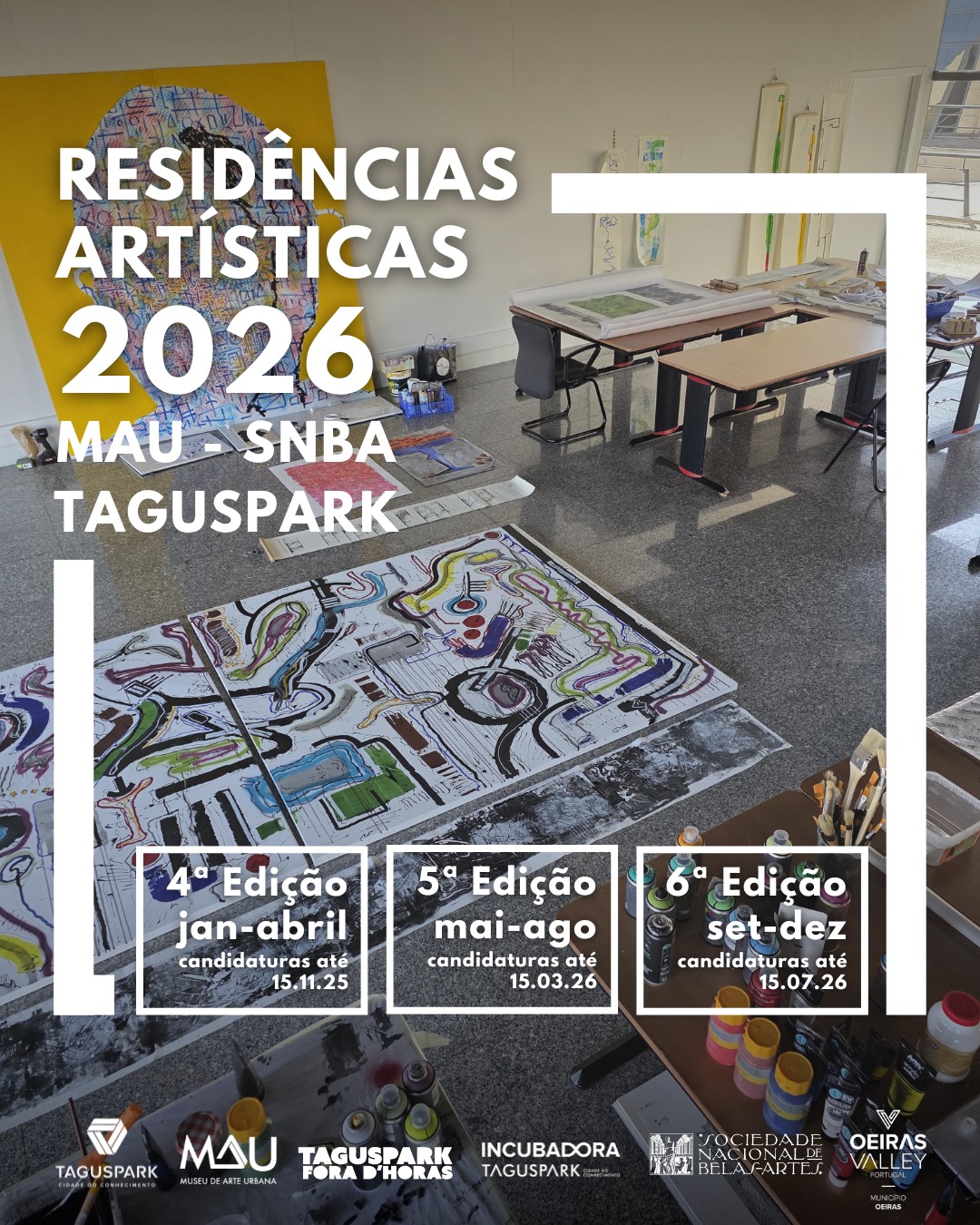
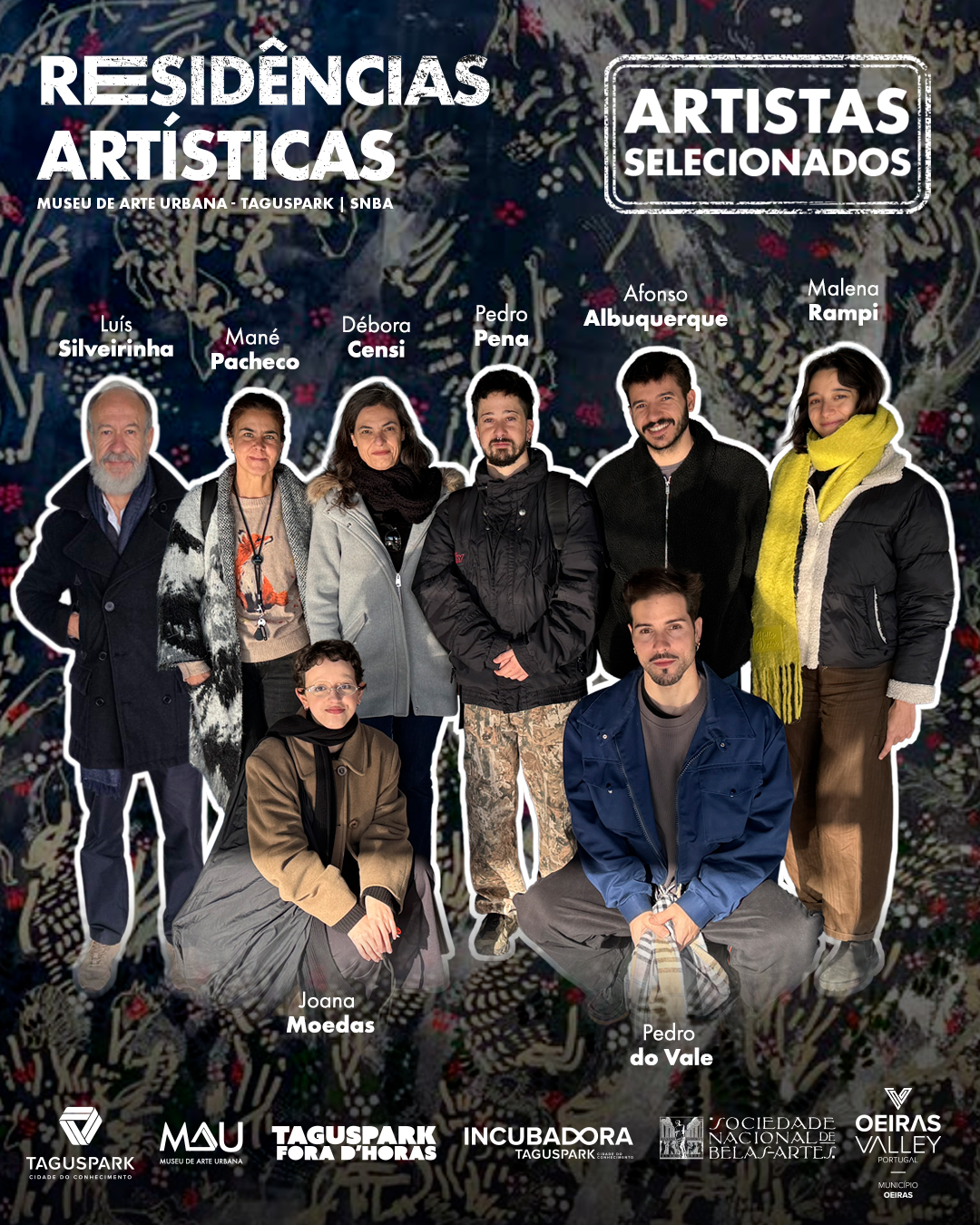
The MAU – Taguspark Urban Art Museum and the SNBA – National Society of Fine Arts have revealed the seven projects selected for the 4th edition of the MAU-SNBA Artistic Residencies, which begins in January and runs until April.
This new edition will highlight seven projects, and the Artist Residencies are expanding their scope to include photography and music.
The selected artists— Afonso Albuquerque and Malena Rampi, Débora Censi, Joana Moedas, Luís Silveirinha, Mané Pacheco, Pedro do Vale, and Pedro Pena —will have the opportunity to experience the creative environment of Taguspark over a period of four months and present their proposals.
The artists and their projects:
Afonso AlbuquerqueandMalena Rampi – Caminho do Artista (The Artist's Path) is a project that transforms the creative process into the artistic object itself. Through videos, sounds, and recordings from their residency at Taguspark, the audience follows the construction of the project's identity, in parallel with the recording of the album. The goal is to develop a solid artistic, visual, and conceptual identity, give visibility to the creative process, and prepare for a structured return to the stage.
Débora Censi – Continues her research into painting on paper, focusing on the construction of non-existent landscapes and architectures through layers and transparencies. Since 2023, literature has become part of the creative process, serving as a starting point for paintings based on poems and literary excerpts.
Joana Moedas – The Risk Internproject explores fear, security, and risk aversion in contemporary societies, drawing on references to medicine and first aid. The artist develops an experimental technique using povidone-iodine applied to raw cloth, exploring the transparency of the material and the impact of light on larger-scale paintings.
Luís Silveirinha – Proposes to deepen an artistic investigation focused on forms inspired by nature in constant transformation, evoking extinct flora and imagined landscapes. Nature emerges as a space and stage for recreation, capable of awakening a renewed sense of wonder and desire, inviting contemplation and rediscovery of its poetic potential.
Mané Pacheco – The project (Im)possible Creatures and Their (Un)certain Futures in a Post-Extractivist Scenario is part of an artistic practice focused on the hybridization between organisms, matter, and technology. Using technical materials and industrial surplus—such as heating components, cables, fiber optics, and bones—the artist constructs “creatures” and objects that speculate on post-human futures and alternative models of coexistence.
Pedro do Vale – The Sea Begins Here is a project that combines art, technology, and environmental awareness. Through painting, video, sculptural installation, and sound, it proposes a critical reflection on human impact on the ocean. At the heart of the proposal is a fundamental question about responsibility, production, and the future: what future are we building for the sea that sustains life?
Pedro Pena – Desire Path is a photographic project based on the concept of informal trails created by continuous use, as a metaphor for freedom, choice, and collective consciousness in urban spaces. Through analog photography, the artist documents resilient and spontaneous gestures that highlight the necessary relationship between nature and the artificial, emphasizing how the city is built by those who live and act in it.
Compared to previous editions, it is important to highlight the higher number of applications and their improved quality, which makes the selection of artists even more discerning. The growth in the number of applications for Artistic Residencies demonstrates the recognition they have among the artistic community, something that is highlighted by Eduardo Baptista Correia, CEO of Taguspark.
“The growth in the number of applications is a sign of the consolidation of Artistic Residencies as a benchmark in contemporary art creation and innovation. It also means that we must reinforce our commitment to an ecosystem that encourages experimentation, the crossing of different artistic disciplines, and contact between artists and the inspiring environment of Taguspark,” says Eduardo Baptista Correia.
Jaime Silva and Rui Penedo, from the National Society of Fine Arts, emphasize the importance of this partnership:
“It is a natural evolution, reflecting the great diversity of current artistic practices. This project is increasingly becoming a privileged space for artistic creation and for promoting emerging artists, bringing them closer to a wider audience.”
MAU-SNBA Artist Residencies
Lasting four months, the MAU-SNBA Artist Residencies offer individual artists and collectives a space to deepen their artistic practice around themes previously defined in their application. The program is already a benchmark in the agenda of artists and Taguspark.